
If you are experiencing tooth pain or tooth sensitivity, seek endodontic care at Dental Club . We enable people to safely improve their teeth while using cutting-edge technology and thus restore oral health through pain-free root canals.
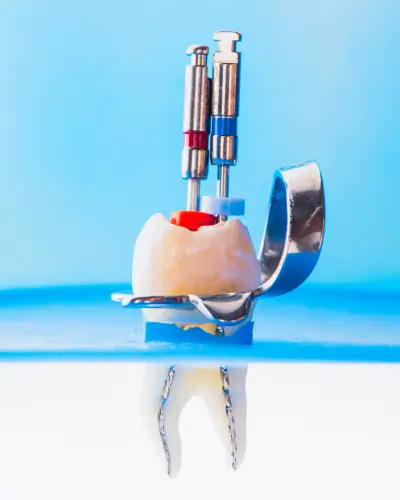
Endodontics is a specialized branch of dental medicine focused on treating the dental pulp and tissues surrounding the tooth’s root. Our expert team of dentists is trained to preserve your natural teeth whenever possible.
Common reasons patients need a root canal procedure include:
Signs you may need to see a Stratford endodontist include:
Preserving your natural teeth through dental work and root canal treatment with a general dentist ensures a great experience, maintains chewing efficiency and natural appearance, and prevents the need for costly tooth replacements.
Worried about discomfort? We provide professional equipment and care to ensure a comfortable experience.
If you raise your hand, we’ll immediately pause to make sure you stay completely comfortable.
We understand that dental emergencies can be urgent. Our team makes every effort to accommodate patients who require prompt attention, based on availability.
We map your tooth's pulp using digital imaging.
Local anesthesia keeps you pain-free.
The infected pulp is carefully removed.
The root canal is filled with a biocompatible material.
A dental crown is placed to strengthen and protect your tooth.
Our dental office is equipped with:
Our Stratford endodontic practice consists of:
If an older root canal fails, our team provides careful retreatment to clean, disinfect, and reseal the tooth, saving it from extraction.
We understand many patients fear root canals. We explain all your questions about every step of the process, offer sedation options when needed, and ensure every patient feels heard and supported.
Our practice is easily accessible from anywhere in Stratford, allowing you to schedule treatments without disrupting your day.
Good habits are essential. After your root canal:
No. With modern anesthesia and techniques, most patients feel no pain during the procedure.
Typically, a root canal takes 60 to 90 minutes. Some cases may require two visits.
Rarely. Proper sealing and good oral hygiene usually prevent future infections.
Delaying can allow the infection to spread, potentially leading to tooth loss and serious health risks.
You can eat once the numbness wears off, usually within a few hours, to maintain your smile, starting with soft foods.
Pain in a previously treated tooth could mean reinfection. Schedule an appointment for root canal retreatment.