
Dental bonding usually costs about $300 to $600 per tooth in the United States, though some cases fall below or above that range. The final price depends on how many teeth need treatment, how much repair is involved, local office fees, and whether the bonding is considered cosmetic or restorative.
If you’re weighing a quick, conservative way to fix chips, small gaps, or minor staining, dental bonding can restore appearance without major tooth reshaping. At The Dental Club in Stratford, CT, our team focuses on natural-looking results and clear cost estimates so you know what to expect.
Teeth bonding uses a tooth-colored composite resin to repair or reshape a tooth. The dentist places the material, sculpts it, hardens it with a curing light, and polishes it so it blends with nearby enamel.
Bonding can help with small chips, narrow gaps, uneven edges, minor discoloration, and slight shape differences. It may also repair some areas affected by decay or protect a spot exposed by gum recession, but a dentist first needs to confirm that dental bonding is the right choice.
A small edge repair often costs less than rebuilding a larger section of a tooth. If several front teeth are treated for a more even smile, the total cost usually rises because each tooth must be shaped and polished individually.
Several everyday factors can change the price of teeth bonding:
Ask for a written estimate that shows the cost per tooth and any separate charges for the exam or imaging. If insurance may apply, the office can often submit a pretreatment estimate, but the insurance company makes the final coverage decision.
Dental insurance often does not cover bonding done only to improve appearance. It may help pay part of the cost when bonding restores a tooth affected by decay, injury, or another covered problem, depending on deductibles, annual maximums, waiting periods, and exclusions.
Some offices also offer financing, phased treatment, or discount plans. Before you move forward, ask what your estimated out-of-pocket cost will be and whether future touch-ups or repairs are included.
The lowest starting price is not always the best long-term value. The right option depends on the tooth’s condition, the amount of change you want, your bite, and how much natural enamel should be preserved.
Option | Common Use | Tooth Preparation | General Cost Pattern | Typical Considerations |
|---|---|---|---|---|
Bonding | Small chips, gaps, or shape and color changes | Usually minimal | Usually lowest | Repairable, but may stain or chip |
Veneer | More extensive front-surface cosmetic changes | Some enamel removal is often needed | Higher than bonding | Longer-lasting in many cases, but not reversible |
Crown | Heavily damaged, weakened, or extensively restored tooth | Significant reshaping | Usually higher | Covers the whole visible tooth for greater protection |
Bonding is a conservative option because it usually keeps more natural enamel than a veneer or crown. Still, it may not be strong enough for a large fracture, severe wear, or a tooth under heavy biting pressure.
For more detail on alternatives, see veneers and dental crowns, or learn about types of dental crowns and how long it takes to get a crown.
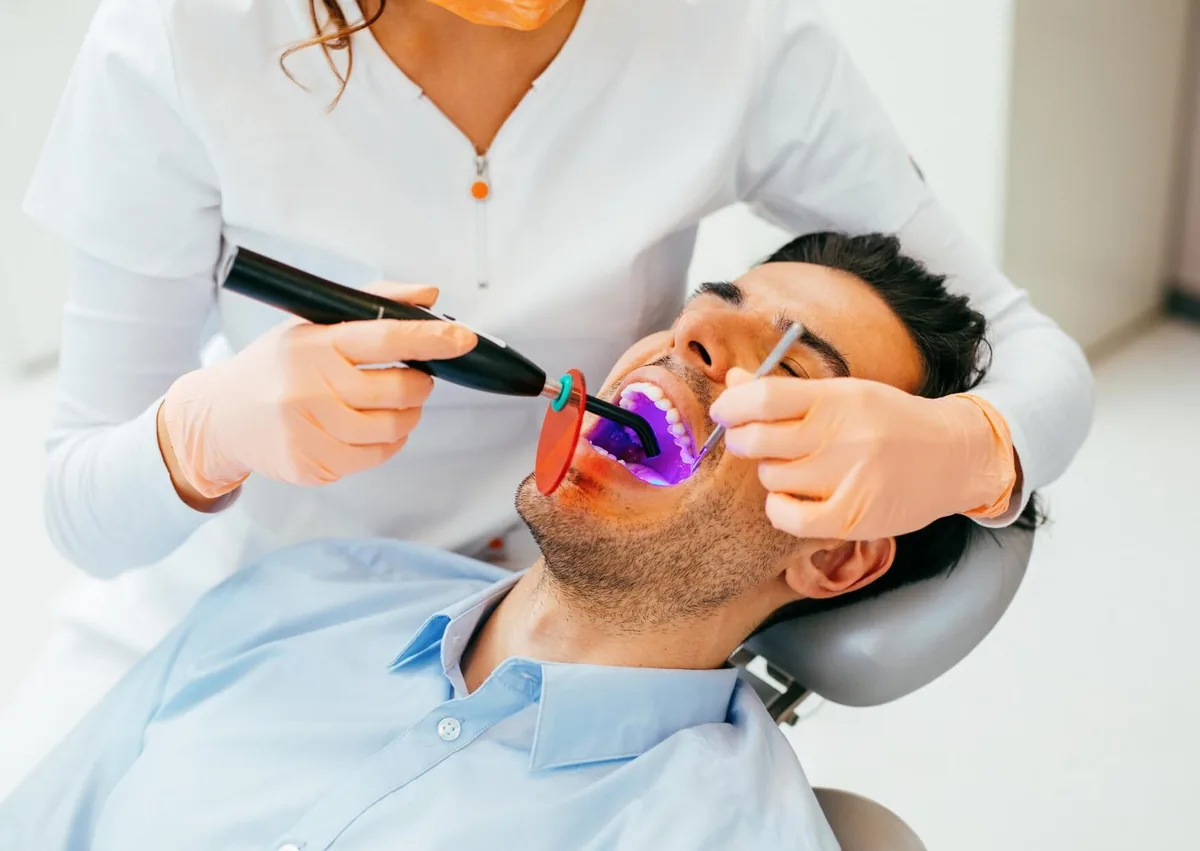
Many bonding treatments are completed in one visit. Numbing may not be needed unless the dentist is treating decay or working close to a sensitive area.
During the visit, the dentist chooses a shade, prepares the tooth surface, places the resin, shapes it, hardens it, and polishes it. The goal is a smooth repair that looks natural in your smile.
After bonding, care is usually simple. Brush, floss, and keep up with regular dental visits, and avoid chewing ice, pens, fingernails, or other hard objects that can chip the resin.
Coffee, tea, tobacco, and other dark-colored substances can stain bonding over time. Bonding may last several years, but how long it holds up depends on the size and location of the repair, your bite, and your daily habits.
Bonding should not cover an untreated cavity, infection, active gum disease, or a bite problem that could make the repair fail early. An exam helps identify why the tooth changed and whether dental bonding is likely to give a predictable result.
Get prompt dental care if you have a broken tooth with severe or worsening pain, facial swelling, fever, pus, uncontrolled bleeding, or trouble swallowing or breathing. Those signs may point to a problem that needs urgent treatment rather than routine cosmetic care.
A local dentist can examine the tooth, explain what result is realistic, and give you an itemized estimate based on the work actually needed. It can also help to bring your insurance information and photos of the look you want.
A brief exam can confirm whether bonding, veneers, or a crown is the right choice for your tooth and yield an itemized estimate for comparison. Call The Dental Club in Stratford, CT for dental bonding and cosmetic options at (203) 378-0182 to discuss your case and schedule an appointment.
Yes. Teeth bonding is usually quoted per tooth, though the final estimate may also include an exam, X-rays, or treatment needed before the bonding procedure.
Usually, yes. Bonding often has a lower upfront cost than porcelain veneers and usually requires less enamel removal.
Bonding can last several years, but there is no guaranteed timeline. Larger repairs, teeth grinding, nail biting, hard foods, staining habits, and heavy bite forces can shorten its lifespan.
No. Bonding works well for some small or moderate chips, but a deep fracture or weakened tooth may need another restoration, such as veneers or dental crowns.
It depends on why the bonding is needed and on the details of your plan. Cosmetic bonding is often excluded, while medically necessary repair may receive partial coverage.