
Wondering how to clean dental implants without damaging them? Brush twice a day with a soft-bristled toothbrush, clean around the implant and between teeth daily with tools your dental team recommends, and keep professional maintenance visits. If your implant was recently placed, follow your surgeon’s instructions rather than a routine meant for a fully healed implant.
If you are unsure how to clean around your dental implants, personalized guidance can help you protect the surrounding gums. At The Dental Club in Stratford, CT, you can get practical advice on choosing tools and caring for your restoration.
Key Takeaway: Your implant needs daily plaque removal even though the replacement tooth cannot get a cavity. Choose cleaning tools that fit your crown, bridge, or denture, and ask your dental team to demonstrate how to reach the surrounding gumline safely.
Table of Contents
A dental implant is a post placed in the jaw that supports a crown, bridge, or denture. Although the artificial parts do not decay, sticky bacterial plaque can collect along the gumline and beneath replacement teeth.
Plaque buildup can inflame the surrounding gums. Gum inflammation does not automatically mean bone loss, but peri-implantitis involves inflammation and loss of bone supporting the implant.
Early problems may not cause pain. Daily cleaning and professional checks work together to help your dental team identify changes that are difficult to see at home.
These steps apply to healed implants that your dental team has cleared for routine care. Your technique will depend on whether you have a single crown, a bridge, or an implant-supported denture.
Pro Tip: Bring two items to your next maintenance visit: your toothbrush and the tool you use between teeth. Ask your hygienist to check your technique and show you any areas you are missing.
A single implant crown may be cleaned much like a natural tooth, but the gum contours and spaces beside it can differ. Floss may work well in one area, while an interdental brush may provide better access in another.
For an implant-supported bridge or fixed full-arch restoration, a floss threader, specialized floss, or water flosser may help reach underneath. A water flosser can be useful, but it does not replace brushing or every other cleaning tool your dental team recommends.
If you have a removable implant-supported denture, remove it for cleaning as instructed. Clean the denture and the attachments in your mouth using recommended products, and ask whether soaking or overnight removal is appropriate for your appliance.
The most expensive device is not necessarily the best fit. Before buying a powered device, ask which features you need and whether a simpler tool can reach the same areas comfortably.
Watch Out: Avoid two potentially damaging habits: scraping around implants with sharp household objects and trying to unscrew a fixed restoration yourself. Leave professional cleaning and removal of fixed components to the dental team.
A newly placed implant or surgical site needs different care from a healed restoration. Your surgeon may temporarily limit brushing near the site, water-flosser use, or other cleaning methods to protect healing tissue.
Follow your written postoperative instructions, including any directions for a prescribed rinse. If anything is unclear, call the surgical office before introducing a new tool or cleaning directly around the site.
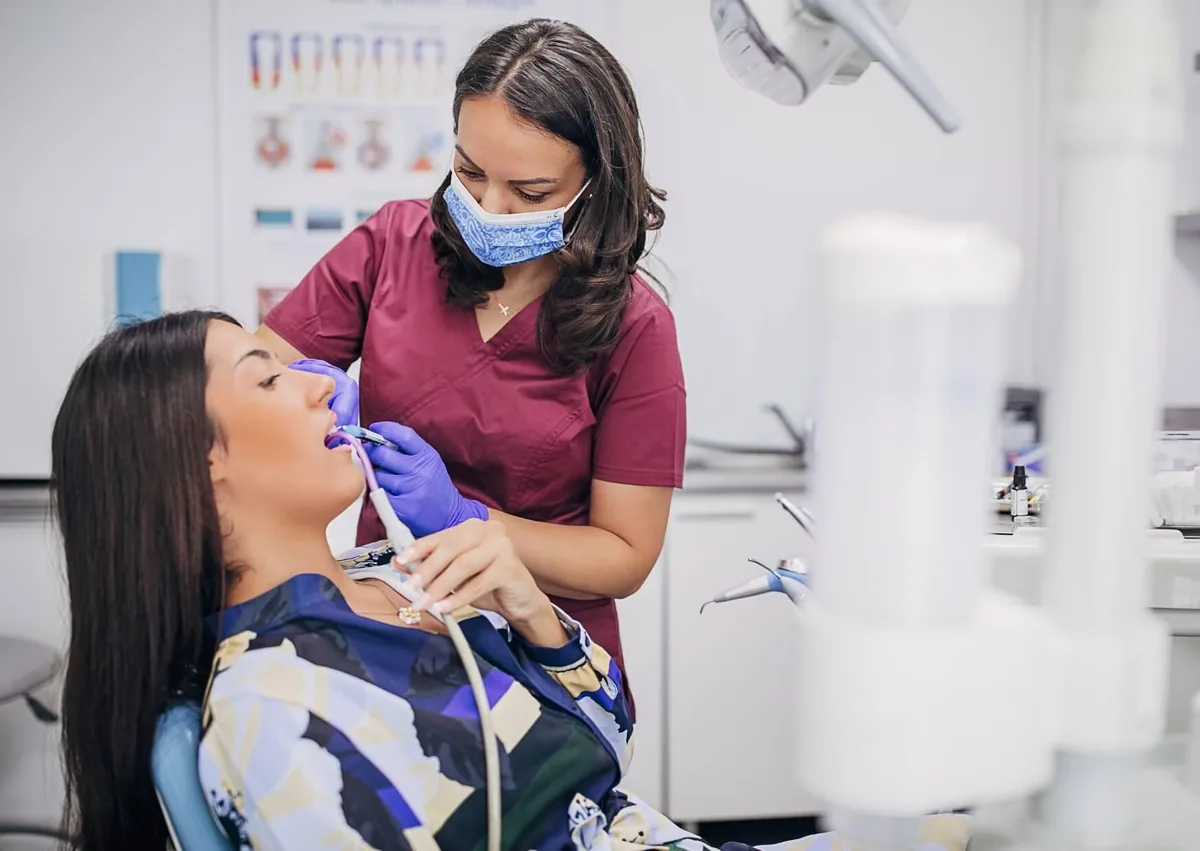
Home care cannot remove hardened deposits or confirm that the supporting bone is healthy. During maintenance visits, your dental team can assess the gums, check the restoration and bite, and use instruments appropriate for implant surfaces during professional teeth cleaning.
Your visit schedule depends on your gum health, cleaning access, medical history, and previous implant problems. If you change dental offices, ask your previous provider to share available implant details, treatment records, and X-rays to support continuity of care.
Contact your dentist promptly if you notice:
A loose-feeling restoration needs evaluation even if it does not hurt, because the problem could involve the crown, connecting parts, or implant. Seek urgent dental care for severe or worsening pain or swelling, especially with fever. Trouble breathing or swallowing requires emergency medical care.
If cost or coverage affects scheduling, request an estimate and ask your insurer whether implant maintenance, imaging, and any needed repairs are covered. Coverage varies by plan, and routine cleaning benefits may not cover every implant-related service.
For a cleaning routine that fits your implant, ask a dental professional to demonstrate the tools and techniques that work for you. Call The Dental Club in Stratford, CT, at (203) 378-0182 to schedule a visit for dental implant care.
A soft-bristled electric toothbrush can be suitable for healed implants. Use gentle pressure and ask your dental team whether the brush head reaches the areas around your restoration effectively.
Mouthwash does not replace brushing and cleaning between teeth or beneath a bridge. Your dentist may recommend a particular rinse for a specific reason, but a prescription rinse is not automatically needed for long-term implant care.
Do not ignore bleeding or respond by scrubbing harder. Continue gentle cleaning as tolerated and contact your dentist if bleeding repeats, persists, or occurs with swelling, pain, or drainage. For a recent surgical site, follow your surgeon’s instructions.