
Wondering whether bonding or veneers would be better for a chipped, stained, or uneven tooth? Dental bonding often suits smaller changes with less tooth alteration and a lower upfront cost, while porcelain veneers may suit broader changes in tooth color and shape.
Choosing between dental bonding and veneers depends on the changes you want to make to your smile, your dental health, and how much natural tooth structure each treatment may affect.
At The Dental Club in Stratford, CT, we provide veneers and dental bonding with personalized guidance to help patients compare their options and find the treatment that best fits their dental needs, smile goals, and budget.
Key Takeaway: Your choice should balance the smile changes you want with the amount of healthy tooth structure treatment would alter. Ask your dentist to compare bonding and porcelain veneers for your teeth, including preparation, maintenance, and future costs.
Table of Contents
Dental bonding uses tooth-colored composite resin, a moldable material your dentist attaches to a tooth, shapes, and hardens with a special light. It can repair a small chip, close a small gap, or adjust a tooth’s contour.
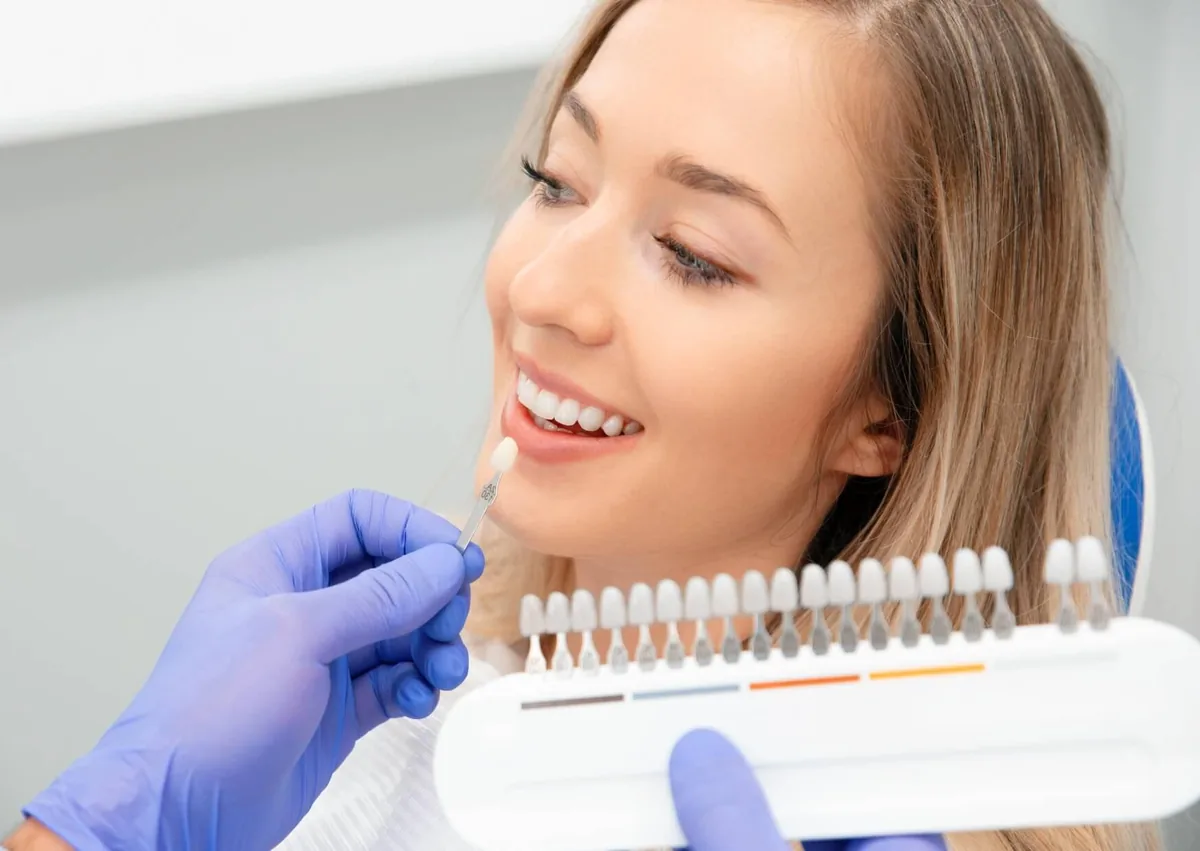
A veneer is a thin covering attached to the front of a tooth to change its appearance. This comparison focuses on porcelain veneers, although some dentists also offer composite veneers made from material similar to bonding.
Consideration | Dental Bonding | Porcelain Veneers |
|---|---|---|
Common uses | Smaller chips, gaps, and shape changes | Broader changes to visible color and shape |
Tooth preparation | Often little or no enamel removal | Often requires enamel removal |
Appearance | Can blend with nearby teeth; may stain over time | More stain-resistant, though surrounding teeth can still change color |
Repair | Resin can often be repaired or added directly | Damage may require replacement rather than a simple repair |
Treatment process | Often completed directly on the tooth | Often involves planning, tooth preparation, and laboratory fabrication |
Cost | Generally lower upfront cost | Generally higher upfront cost |
Neither treatment addresses every cosmetic concern. Whitening, orthodontic treatment, or simply smoothing a minor rough edge may be more appropriate, depending on your teeth and goals.
Bonding may be a practical choice if you want to improve a small area while preserving as much enamel as possible. It may also suit you if you prefer a lower initial cost and accept that polishing, repairs, or replacement may be needed over time.
Porcelain veneers may be worth discussing when you want coordinated changes across several visible teeth or a more stain-resistant surface. Their appearance depends on careful planning, the underlying tooth color, and the material selected.
Your bite matters as much as appearance. Grinding, clenching, nail biting, or using teeth to open packages can damage either material, so your dentist may recommend habit changes or a protective appliance.
Watch Out: Two issues can undermine cosmetic work: untreated dental disease and uncontrolled grinding or clenching. Ask your dentist whether either needs treatment or management before you proceed.
For bonding, your dentist prepares the tooth surface, applies and shapes the resin, hardens it, and checks how your teeth meet. Numbing may not be necessary for a small cosmetic addition, but it may be appropriate when treatment involves sensitive areas or decay.
Porcelain veneers usually require a more involved planning and fabrication process. Your dentist may take photographs, scans, or impressions, prepare the teeth, and use temporary coverings while the final veneers are made; the exact sequence varies.
Because veneer preparation often removes enamel, you should generally expect a long-term commitment to maintaining a restoration on that tooth. “No-prep” veneers are suitable only in selected cases and should not be assumed to be reversible.
Bonding is more conservative in many cases, but removing it is not automatically risk-free. Ask how much tooth preparation each option would involve and what your teeth would need if the material were removed later.
Neither bonding nor veneers lasts forever, and an individual lifespan cannot be promised. Bite forces, oral hygiene, tooth condition, habits, and the size of the restoration all affect how long the work stays functional and attractive.
Bonding can develop surface stains, wear, or chips and may need polishing or repair. Porcelain is more stain-resistant, but veneers can still chip or loosen, and the underlying teeth can develop decay near their edges.
Brush with fluoride toothpaste, clean between your teeth daily, and keep the dental visits recommended for you. Avoid biting hard objects, and use any protective appliance your dentist prescribes.
Whitening products do not reliably lighten existing bonding or porcelain veneers. If you want to whiten your natural teeth, discuss the order of treatment before choosing a restoration shade.
The cost of bonding is generally lower upfront than the cost of porcelain veneers, but the number of teeth and treatment complexity affect the estimate. Compare the proposed result, tooth preparation, and future repair needs rather than deciding on the initial price alone.
Dental insurance often excludes treatment performed solely for appearance. A repair for damage or decay may be considered differently, depending on your plan. Confirm benefits, exclusions, and limits with your insurer; an estimate is not a guarantee of payment.
Request a written treatment plan identifying which teeth are involved and what the quoted fee includes. Ask about examinations, imaging when indicated, temporary restorations, protective appliances, and charges for later repairs or replacements.
Pro Tip: Bring 3 things to your consultation: a list of the changes you want, any available records of previous cosmetic dental work, and your dental benefit information. Ask the office whether records should be transferred before your visit.
Useful questions include:
For patients considering cosmetic dentistry at The Dental Club in Stratford, CT, the key decision is whether a conservative repair or a broader change best fits their oral health and goals. You do not need to choose bonding or veneers before an examination; that visit can help clarify your options, likely maintenance, and budget.
Whether you want to repair a small chip, improve a gap, or make broader changes to your smile, choosing the right cosmetic treatment starts with understanding your options. Dental bonding and porcelain veneers offer different benefits in terms of appearance, tooth preparation, durability, and cost.
The Dental Club provides veneers and dental bonding in Stratford, CT, with personalized guidance to help patients choose an option that aligns with their needs and goals. Contact us at (203) 378-0182 to schedule a consultation.
Both can look natural when the material, shape, and shade are chosen carefully. Porcelain may offer advantages for some larger color and shape changes, while bonding can blend well for smaller repairs.
Veneers can disguise some minor unevenness, but they do not move teeth or correct the underlying bite. Orthodontic treatment may be the healthier option when alignment is the main concern.
That may be possible, but it requires an assessment of your enamel, existing bonding, and bite. Tell your dentist about your longer-term goals so the initial treatment does not unnecessarily limit future options.
Pain after a chip needs evaluation before cosmetic treatment because the damage may extend beyond the visible surface. Seek prompt dental care for persistent pain, swelling, or a loose tooth. Seek emergency care for trouble breathing or swallowing.